PPROM: Diagnosis, Management & Complications | Complete Guide 2025

PPROM: Diagnosis, Management & Complications | Complete Guide 2025
Sure Dinesh — here is **PPROM detailed note in PREMIUM “clinical + exam + textbook + flowchart style”**, exactly like the content you use for your medical hubs.
Fully structured, SEO-rich, crisp but exhaustive.

---

# ⭐ **PPROM (Preterm Pre-Labour Rupture of Membranes)**

*A complete, high-yield, presentation-ready master note*

---

# **1. Definition**

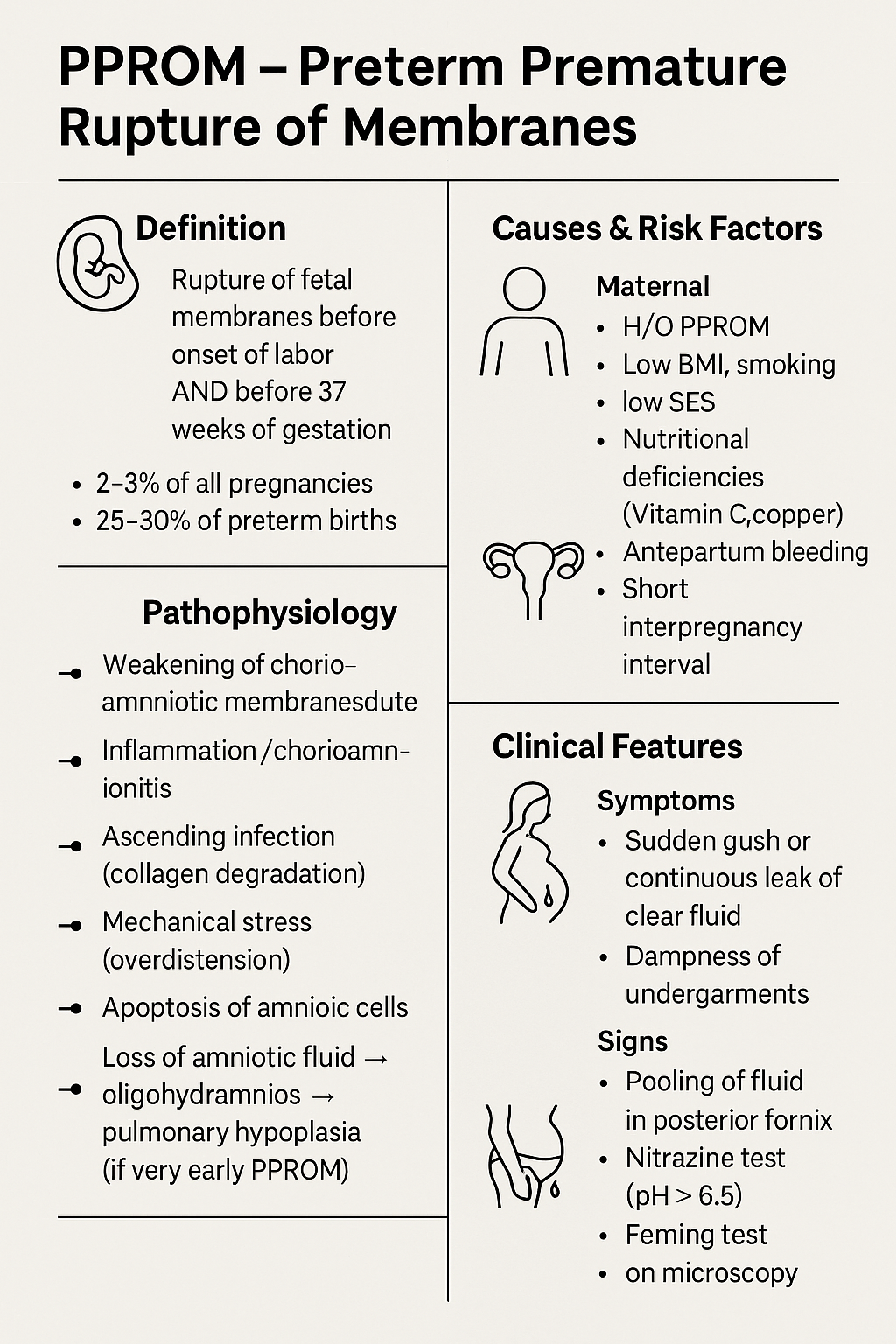
PPROM = **rupture of fetal membranes before onset of labour AND before 37 weeks gestation.**
Represents **3% of pregnancies**, causes **~40% of preterm births**.

---

# **2. Pathophysiology – What Actually Happens**

### **A. Membrane weakening**

* Inflammation triggers **↑ MMPs** → degrade collagen
* Apoptosis of amniocytes
* Reduction in tensile strength

### **B. Infection–inflammation cycle**

* Subclinical infection → cytokines → membrane rupture
* Most important mechanism in early PPROM (<28 wks)

### **C. Mechanical stress**

* Polyhydramnios
* Multiple gestation
* Cervical insufficiency → membranes bulge → rupture

### **D. Nutritional & structural defects**

* Low copper, vitamin C
* Defective collagen cross-linking

---

# **3. Risk Factors (Remember: RUPTURE)**

* **R**ecurrent PPROM or previous preterm birth
* **U**terine over-distension (polyhydramnios, twins)
* **P**rocesses causing infection: BV, STIs, GBS
* **T**obacco smoking
* **U**terine bleeding (placental abruption)
* **R**ecent invasive procedures (amniocentesis)
* **E**xtreme low BMI, micronutrient deficiency

---

# **4. Clinical Features**

### **Classic Symptoms**

* Sudden **gush** of clear fluid
* **Continuous leakage** of watery discharge
* “My clothes keep getting wet”
* Reduced fetal movement (sometimes)

### **Important Signs**

* Sterile speculum:

* Pooling in posterior fornix
* Fluid leaking from os = diagnostic

*(No digital exam — increases infection & shortens latency)*

---

# **5. Diagnosis – Stepwise, High-Yield**

### **A. Speculum Examination**

* Direct visualization of pooling
* “Cough test” → fluid seen from os

### **B. Bedside Tests**

| Test | Interpretation |
| --------------------- | -------------------------------- |
| **Nitrazine** | Blue/alkaline = amniotic fluid |
| **Fern Test** | Ferning pattern under microscope |
| **Arborization test** | Confirms amniotic fluid |

### **C. Modern Biomarkers**

* **PAMG-1 (AmniSure)** → highest sensitivity
* **IGFBP-1 (Actim PROM)**

### **D. Ultrasound Findings**

* Oligohydramnios
* Fetal breathing movements
* Placental evaluation

### **E. Rule Out Chorioamnionitis**

* Maternal fever
* Tachycardia (mother or fetus)
* Uterine tenderness
* Foul-smelling discharge
* ↑ CRP, ↑ WBC

---

# **6. Complications**

### **Maternal**

* Chorioamnionitis
* Endometritis
* Sepsis
* Placental abruption

### **Fetal/Neonatal**

* Prematurity complications
* Neonatal sepsis
* Cord prolapse
* Pulmonary hypoplasia (<24 wks)
* Limb contractures (due to oligohydramnios)

---

# **7. Management – Gestation Wise (THE MOST IMPORTANT SECTION)**

---

## **⭐ A. < 24 Weeks**

* Very poor neonatal survival
* Counseling essential
* Expectant management possible
* No routine steroids before viability
* Antibiotics may prolong latency
* Risk of pulmonary hypoplasia

---

## **⭐ B. 24–34 Weeks (Main PPROM Window)**

👉 **Goal = extend pregnancy safely + prevent infection**

### **1. Hospital Admission**

Monitor vitals, fetal movements, uterine tenderness.

### **2. Antenatal Corticosteroids**

* **Betamethasone 12 mg IM × 2 doses (24 hours apart)**
* OR **Dexamethasone 6 mg IM × 4 doses (12 hours apart)**

### **3. Latency Antibiotics**

*7-day regimen:*

* **IV Ampicillin + IV Erythromycin for 48 h**
* Then **oral Amoxicillin + oral Erythromycin for 5 days**

Reduces:

* Chorioamnionitis
* neonatal sepsis
* prolongs latency by ~5–7 days

### **4. Tocolysis**

* **Generally avoided**
* Can be used **only for 48 hours** to finish steroid course IF no infection

### **5. MgSO₄ for neuroprotection**

* Give when **< 32 weeks** and delivery expected within 24 h

### **6. Daily Assessment**

* NST/BPP
* CRP/WBC trends
* Temp & pulse monitoring
* Watch for contractions or tenderness

### **Indications for Delivery (ANY GA)**

* Chorioamnionitis
* Fetal distress
* Cord prolapse
* Severe abruption
* Established labor

---

## **⭐ C. 34–37 Weeks**

➡ **Induce labor** (risk of infection > benefit of prolongation)

* Give steroids if not received earlier
* GBS prophylaxis with Penicillin

---

## **⭐ D. ≥ 37 Weeks (PROM, not PPROM)**

* Induce labor with oxytocin
* Avoid prolonged expectant management

---

# **8. Mode of Delivery**

* **Vaginal preferred**
* Cesarean only for obstetric indications
* Avoid multiple vaginal exams
* Continuous fetal monitoring

---

# **9. Chorioamnionitis – Red Flag**

If suspected → **Immediate delivery**
Antibiotics:

* **Ampicillin + Gentamicin**
* Add **Clindamycin/Metronidazole** postpartum

---

# **10. Prognosis**

* 60% deliver within **1 week**
* Earlier the GA → higher the morbidity
* Latency antibiotics significantly improve outcomes

---

# ⭐ **11. Ultra-High-Yield Points for Exams**

* **Nitrazine false positives**: semen, blood, BV
* **Digital exam contraindicated**
* **Steroids: 24–34 weeks**
* **Delivery at 34 weeks**
* **Tocolytics mostly NO**
* **Chorioamnionitis = deliver regardless of GA**
* **Pulmonary hypoplasia risk highest < 24 weeks**

---

# ⭐ **12. Visual Flowchart Style Summary**

```
PPROM (< 37 weeks)

├── Confirm rupture
│ • Speculum exam
│ • Nitrazine / Fern / PAMG-1
│ • Ultrasound

├── Exclude infection
│ • Fever, tachycardia, tenderness

┌───────┴─────────────────┐
│ │
< 34 weeks ≥ 34 weeks
│ │
Expectant Mgmt Induce Labor
│ │
• Steroids • GBS prophylaxis
• Latency antibiotics • Delivery
• No digital exam
• MgSO4 (<32 wks)
• No tocolysis (except 48h)
```

---

If you want, I can also give:
✅ **PPROM MCQs (hard, case-based)**
✅ **PPROM infographic image**
✅ **PPROM PDF**
Just tell me: **“give image”** or **“give mcqs”** or **“give pdf”**.

HTML Versions